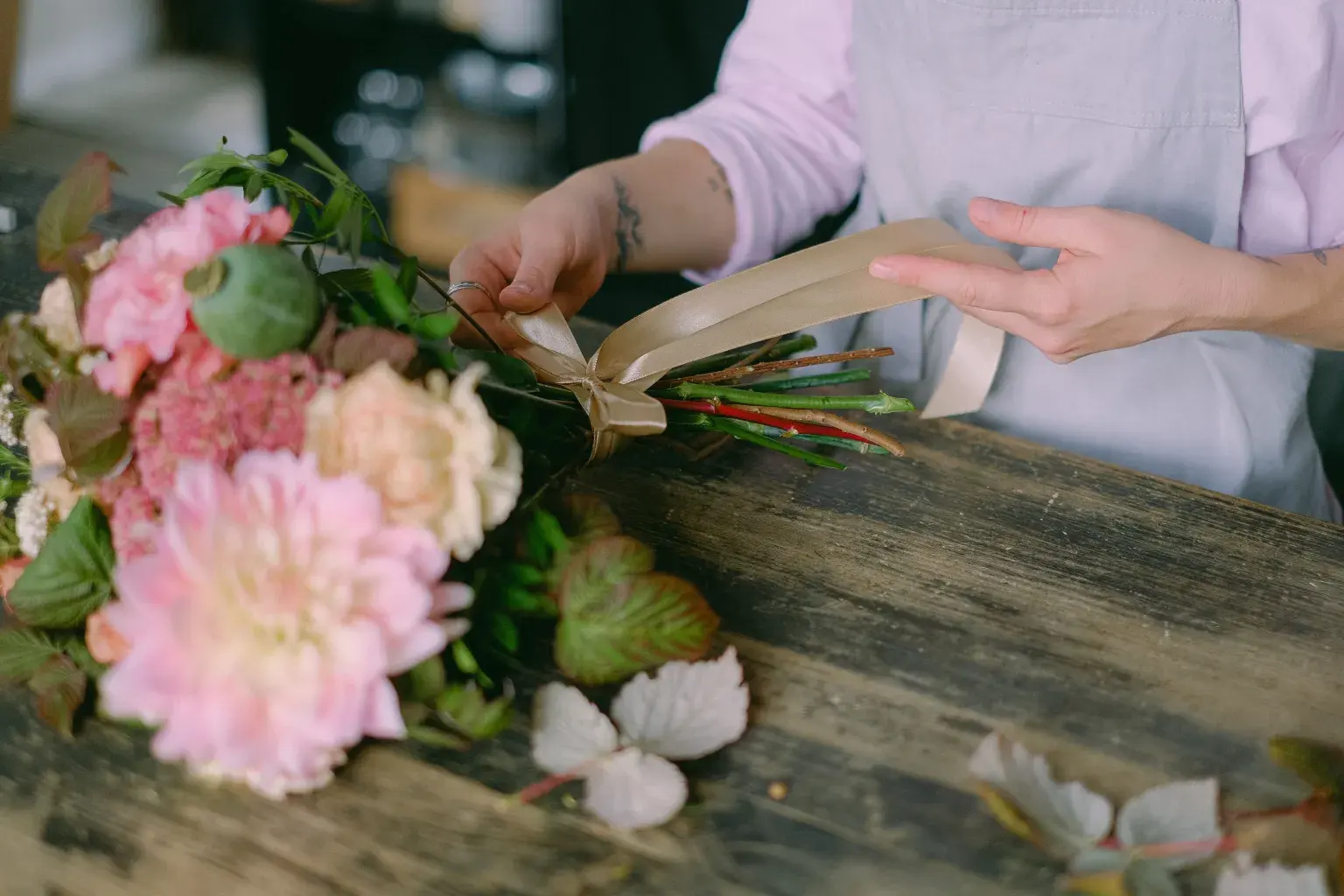
Compare exact piece counts, scale, flower flexibility, vessels, mechanics, candles or décor, delivery, installation, room transfer, teardown, rentals, mandatory charges, and tax. Price a case where quantities change, confirm who owns every transfer, rental return, and pickup, and mark every job the florist hasn’t confirmed as still open.
Compare the quote
List what each flower quote includes.
Compare the design, size, setup, delivery, labor, rentals, and removal. Mark anything that still needs a price.
Understand what the flower-and-decor benchmark means
Zola’s 2026 vendor table lists a $6,345 average and a $5,100 to $7,600 typical range for the combined Flowers & Décor category. Because the table combines categories, don’t read $6,345 as a florist-only fee or a recommended split. A floral-only order of bouquets and personal flowers buys much less than a design package with ceremony structures, reception centerpieces, candles, vessels, delivery, installation, room transfer, and teardown.
Use the figure to hold an early placeholder, then replace it with a written design scope and a local proposal. Write the combined category label, year, and statistic type beside the placeholder, and avoid calling it the price most couples pay or a spending target. When proposals arrive, check whether each total includes nonfloral décor and setup work before comparing it with the combined figure.
Zola also says location and priorities materially affect total wedding cost, which is context with no floral pricing method attached.
A benchmark carries its publisher’s definitions and population with it. The Knot’s methodology describes a retrospective study of 10,474 U.S. couples married in 2025 and recruited through The Knot or WeddingWire membership, and notes that some statistics came from separate studies. That research is still worth reading, as long as each number stays attached to its sample, year, and scope.
Write down whether a source reports flowers alone, flowers and decor, actual spend, budget-tool data, or vendor prices, and keep unlike figures on separate lines. For the decision itself, the florist’s proposal for your date, locations, quantities, design direction, service needs, and substitutions carries the most weight.
Translate the visual idea into countable scope
Make an inventory before comparing looks. Personal pieces can include bouquets, boutonnieres, corsages, hair flowers, and presentation items. Ceremony pieces can include aisle pieces, an entry arrangement, a structure, altar or stage designs, and petals where permitted. Reception pieces can include centerpieces by table type, bars, escort displays, cake flowers, lounge or fireplace pieces, and ceremony work moved to the reception.
Then list vessels, mechanics, candles, stands, linens, or nonfloral decor only if the florist supplies them. For each item, write down quantity, approximate scale, color and texture priorities, flower flexibility, rental status, and where it goes after the event. “Lush centerpieces” is hard to compare, so write twelve low designs in owned vessels.
Add a floor-plan reference and the person placing each installation. Note whether photographs are inspiration or a promised copy, since flower availability and mechanics may prevent exact copies. Ask the florist: “Which features will you keep fixed, like color family, shape, scale, focal flowers, or movement, and which can change?”
An occupational wage can’t be turned into a floral package price. The Bureau of Labor Statistics reports a May 2024 median employed wage of $17.37 per hour for floral designers and notes that self-employed designers also handle pricing, inventory, advertising, and taxes. That wage excludes flowers, foliage, vessels, mechanics, wastage, refrigeration, workspace, insurance, delivery, installation, assistants, teardown, rentals, and business overhead, and it does not measure self-employed income.
So compare the complete creative and delivery package, and set aside any math that multiplies an hourly figure by time on site.
Use a complete wedding flower cost model
Comparable floral total = personal flowers + ceremony designs + reception designs + decor and rentals + delivery + installation and transfers + teardown and pickup + mandatory charges and taxes. Keep optional upgrades on their own line.
Example numbers, Scenario A: personal flowers are $900, ceremony pieces $1,500, reception designs $2,700, rentals $400, delivery and installation $600, and teardown $300. The calculated subtotal is $6,400 before any stated mandatory addition or tax. If another proposal says “full floral design $5,900,” ask whether it includes the same quantities, scale, rentals, transfer, and teardown. It is lower on the same scope only once every answer is yes.
Add a high-case column for changes you can see coming: two extra tables, a larger ceremony structure, an added delivery location, or a late pickup. Use only rates the florist states, and mark any change without a stated price as still open.
Example numbers, Scenario B: start with twelve reception tables and a made-up $225 design allowance per table, for $2,700. If the floor plan grows to fifteen tables at the same allowance, the line becomes $3,375, a $675 increase. Not every florist prices per piece, so treat this as a model.
Real pricing may not rise evenly, because vessel inventory, flower varieties, labor, or minimums can change. Now try a mixed plan: eight floral centerpieces at the quoted amount and seven nonfloral designs using approved rented pieces. Price both kinds, plus setup and returns, and don’t assume the nonfloral tables are free.
Add the guest-table deadline from the floor-plan process and the florist’s deadline for quantity changes. If tables change after product is ordered, the per-piece amount may miss rush sourcing or unavailable vessels. Ask: “How do you handle a late change in table count?” Put the answer in the high-case column.
Compare setup and delivery along with the mood board
Ask who confirms final quantities, orders product, approves substitutions, gets venue access, installs, moves ceremony pieces, refreshes or repairs designs, removes mechanics, and returns rentals. Write down access windows, stairs, loading, parking, water, power, climate limits, open-flame rules, attachment restrictions, and cleanup duties.
Moving a ceremony piece to the reception works only when time, distance, labor, and a safe placement plan allow it, and it can’t happen while guests are standing in the path. Price the move, or choose a design that stays put.
Confirm who owns each vessel or structure, the loss or damage terms, and the return deadline. Share the florist’s plan with the venue, planner, caterer, photographer, and rental team. Centerpieces wait for linens, and a ceremony structure may need approval before installation, so name the person responsible for each step. If an outdoor design has a weather limit, ask what the backup design is and when the decision is due.
Save the exact approved version. The Federal Trade Commission recommends reviewing policies and retaining contracts, invoices, receipts, statements, and other relevant records when resolving a business problem. For flowers, keep the proposal, signed agreement, inspiration images the contract refers to, color notes, item counts, rental list, substitution language, floor plan, delivery and transfer schedule, invoices, payments, and approved changes in one folder, with dated revisions.
A mood board doesn’t list quantities, and a spoken “something like this” doesn’t promise delivery.
When the proposal arrives, send a short written recap of what you believe the total includes and ask the florist to correct anything that doesn’t match. Keep the floor plan and item list together, since quantities without locations lead to mistakes. Photograph or note the condition of rented items only if the contract or the usual handoff calls for it.
When several companies own similar vessels, candles, or structures, save the pickup confirmation that ends each one’s responsibility.
Plan for place and affordability without a false formula
Geography can affect broad price levels, and the Bureau of Economic Analysis Regional Price Parities aren’t floral-price multipliers. BEA describes RPPs as state and metro price-level comparisons expressed relative to the national level. Use them only to understand why a national figure may fit your area poorly.
Floral proposals depend more directly on date, market, product availability, design scope, labor, workspace, travel, venue access, installation, and rental logistics. Get current proposals for your venue and date, and ask each florist where flexible flower choices change risk or price. Multiplying Zola’s $6,345 combined Flowers & Décor figure by an RPP doesn’t produce a local florist quote, and none of the sources we checked supports that method.
If a designer isn’t local, give travel and logistics their own lines. Ask where product is prepared, how delivery windows are protected, whether lodging or a second vehicle is needed, and what happens if transportation fails. A distant designer may still be the right fit, as long as the comparison shows the added travel and logistics cost.
Set your highest flower amount from your own finances. Census reported 2024 median household income of $83,730 under a pretax money-income measure. That figure covers all households and says nothing about flowers.
The Federal Reserve reported that 63% of adults could cover a $400 emergency expense with cash or its equivalent. Those figures are a reason to keep a cushion, and they set no income percentage for flowers. Price the approved base design and a high case that includes quantity changes or a stated substitution approach.
If it goes past what you have, remove or simplify named pieces, reduce scale, choose flexible varieties, move pieces only where the logistics work, or shift decor categories.
A smaller design you chose on purpose beats an unfunded “miscellaneous” line. Rank pieces by the moment or space they serve, protect the ones that shape the ceremony or reception, and simplify the rest. Recalculate delivery and labor after removing pieces, since the savings may be smaller than the product amount you cut.
Approve the final design and service scope
When you review the contract, confirm date, locations, itemized quantities, approximate scale, color and texture direction, flower flexibility, substitution approval, vessel and rental ownership, delivery, installation, transfer, teardown, pickup, venue access, attachment or flame restrictions, contacts, change deadlines, payment dates, cancellation or rescheduling, loss or damage, mandatory charges, and taxes.
Nolo’s general contract overview emphasizes agreement on essential terms and gives no local legal advice, so take enforceability or state-law questions to a qualified professional. Ask for enough detail that someone outside the planning could rebuild the included designs and services from the document.
If a detail matters to the look or the budget, get it in writing. Ask how the final design review changes the approved scope and how new quantities are priced. Confirm what happens to rented pieces after the event and who pays a late-return or damage charge. List florist-owned structures apart from venue or rental-company property, so each pickup has an owner.
Choose in three passes. First, confirm the florist can handle the date, venue, quantities, and logistics you need. Second, bring the proposals to the same scope and calculate the base and high-case totals. Third, weigh design fit, communication, approach to substitutions, and confidence in the team, using their work and references, since the sources we checked don’t rank vendors.
After booking, match the floral inventory to the floor plan, venue rules, photographer timeline, and teardown schedule. Name one person who may approve a change on the day. Check the final item count, rental list, access window, transfer assignments, and pickup owner before the final payment. Give the planner or day-of contact the current version only.
Frequently asked questions
Does Zola’s $6,345 Flowers & Décor average cover flowers only?
No. Zola labels it as the combined Flowers & Décor category, so keep it separate from a florist-only quote. Compare that category label with the exact scope in each proposal.
Can I estimate a florist quote from the BLS hourly wage?
No. BLS reports an employed wage and notes that self-employed floral designers also handle business tasks such as pricing, inventory, advertising, and taxes. Use the statistic as labor-market context only, and price flowers from written proposals.
Does repurposing ceremony flowers always save money?
Only sometimes. Confirm timing, distance, labor, access, mechanics, and the destination design, then compare the stated transfer cost with a design that stays in place.
How should floral substitutions be handled?
The sources we checked give no universal rule. Put the allowed flexibility, protected features, approval process, and effect on price or design in the written agreement.
Which floral records should I save?
Keep proposals, contracts, item counts, approved design references, rental lists, floor plans, invoices, receipts, payments, schedules, and written changes, with each revision dated.
Last reviewed . Editorial standards