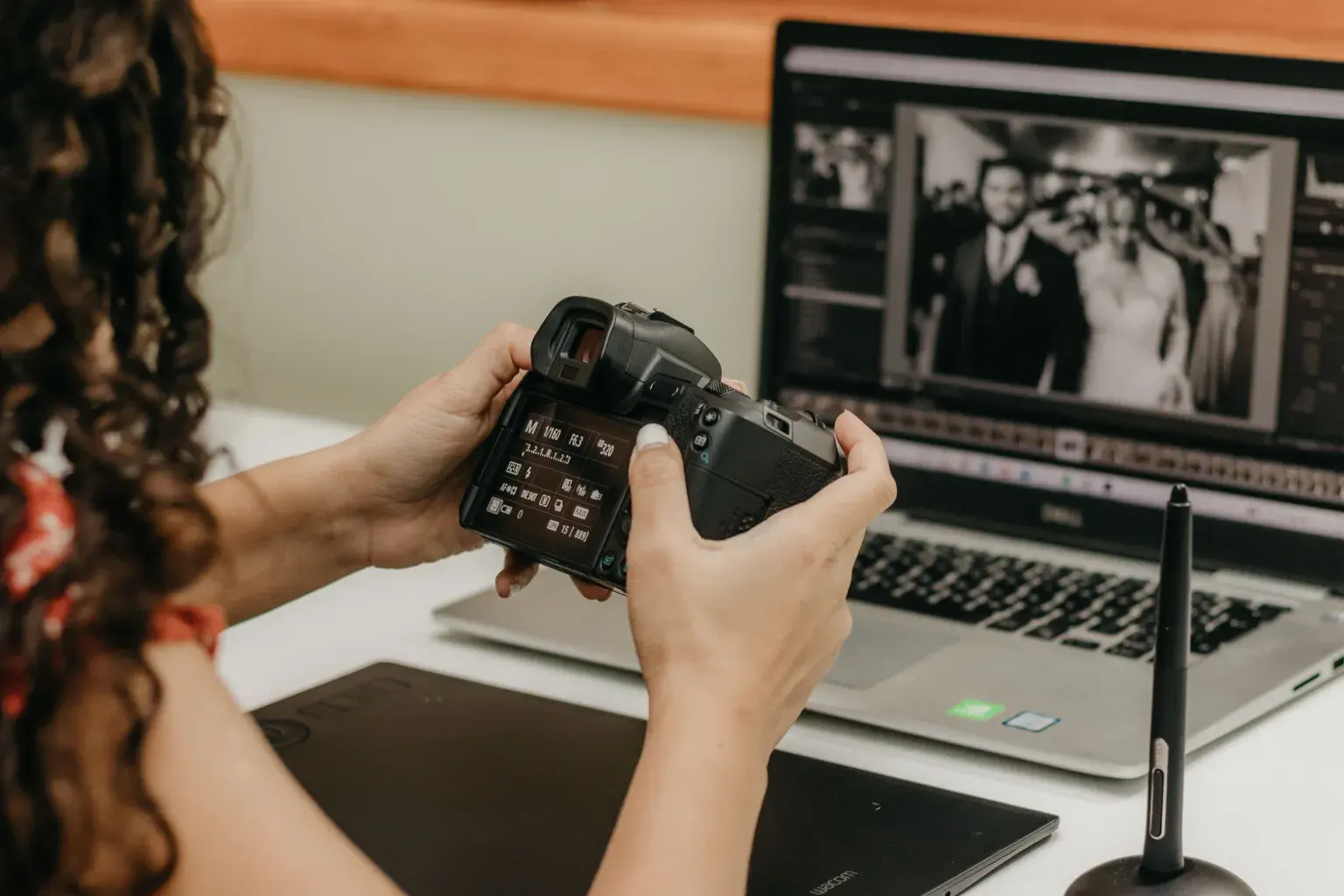
Price the same hours, photographer count, travel, planning, image delivery, albums, usage terms, overtime, and tax across every photographer, with a realistic case for the day running long. If delivery or usage terms are missing, mark them still open and ask.
Compare the quote
Compare the same work in every photo quote.
Check hours, staff, travel, photo rights, albums, delivery, and extra coverage before you compare totals.
Start with a labeled photography benchmark
A benchmark helps with one early question: roughly how much should the photography line hold? Zola reports a $4,400 photography average and a $3,500 to $5,300 typical range in its 2026 vendor table. It also says location, guest count, and priorities materially affect total wedding cost. The figure is a published category average, with no promise about your date, city, experience level, coverage, or deliverables.
A $3,800 six-hour proposal and a $4,600 eight-hour proposal with a second photographer and album buy two different things. So turn each proposal into a list of services and outputs you can compare line by line. On the budget line, write whether the figure is a mean, plus its category and year, and avoid calling it the price most couples paid.
Once written quotes arrive, let them set the working amount.
How a study was run tells you how much weight its number can carry. The Knot’s report describes responses from 10,474 U.S. couples married during 2025, recruited by email through The Knot and WeddingWire membership. It calls the study retrospective and notes that some figures draw on separately fielded studies. So it describes the couples who took part.
In your comparison sheet, write down the publisher, year, population, statistic type, and category definition. Keep Zola’s category figure and another publisher’s differently defined number apart, without averaging them. Your own written quotes, tied to your schedule and deliverables, are what you decide on.
Define what the photography package buys
Split each package into coverage, production, and delivery. Coverage is the contracted start and stop times, locations, lead and second photographers, and any rehearsal, welcome event, engagement session, or day-after work. Production is planning calls, timeline input, travel, equipment, lighting, backups, culling, editing, and gallery preparation. Delivery is the expected gallery, delivery window, download method, print permissions, album or print credits, archive period, and any raw-file policy.
The Bureau of Labor Statistics notes that wedding and portrait photographers may also provide albums and framing, so a deliverable can be a product as well as time. Put every included item in writing, and mark anything only discussed as still open until it appears in the agreement. Then sketch the day: each moment you want, its location, and its coverage hour.
Preparation in two distant rooms, a first look, family portraits, ceremony details, cocktail hour, sunset portraits, and reception entrances can overlap. The sketch shows whether you need two people working at once or a different order.
The employed hourly wage gives you no shortcut to a client price. BLS reports a May 2024 median employed wage of $20.44 per hour for photographers and says self-employed workers represent 66% of employment in the occupation. Its wage data exclude self-employment income.
A wedding business can also carry editing time, equipment, software, insurance, marketing, administration, taxes, assistants, travel, backups, and product costs. Eight hours of coverage may be only part of the work behind a delivered gallery. So set hours times wage aside, and compare package against package with the same hours, staffing, locations, products, and delivery.
Normalize wedding photographer cost with transparent math
Comparable photography total = base package + added coverage + second-photographer charge + travel or lodging + products and sessions + planned overtime + mandatory fees and taxes.
Example numbers: you want an eight-hour day with two photographers. Studio One quotes $3,900 for six hours, $350 for each added hour, and $500 for a second photographer. Brought up to eight hours with that second photographer, its calculated total is $5,100 before any stated tax or fee. Studio Two quotes $4,950 for eight hours and two photographers, so on that scope it is $150 lower.
The math can’t tell you which team is better. It keeps a smaller base package from looking cheaper than it is. Run it once with products left out, then again with the same album or session added to both. That shows whether a package’s value comes from something you want or from a bundle you wouldn’t otherwise buy.
Example numbers for a long day: a $4,400 package includes eight consecutive hours, and the agreement quotes $300 per added hour. Your draft timeline runs seven hours and forty-five minutes from preparation to the last planned photo.
Write down an on-time total of $4,400 and a one-unit overtime total of $4,700. Then ask the photographer what counts as an overtime unit, who may approve it, whether a late start changes coverage, and whether travel between locations counts. Also ask: “If the reception runs late and you leave on time, what happens to the moments we miss?”
A buffer in the timeline still uses paid hours. So decide as a couple which moments can be dropped, moved, or protected, and settle it before the day. If portraits depend on a narrow outdoor window, moving that block may protect more than an extra hour at the end. Ask the photographer for their own timeline advice for your venue.
Compare delivery promises and usage terms
A clear proposal states the deliverable without promising a set image count. Write down the gallery type, editing description, any estimated or guaranteed quantity, preview policy, delivery window, album specifications, print credit, shipping, gallery expiration, archive policy, and replacement options. Add the client’s stated download, sharing, and printing permissions, plus the photographer’s publication or portfolio terms. Don’t assume “digital images included” answers any of those questions.
If privacy, fast delivery, a particular album, or long-term storage matters to you, give it its own line. The BLS description of wedding and portrait photographers who may provide albums and framing supports keeping products on their own line apart from coverage hours. Ask: “When does the delivery window start, and are there deadlines for choosing album photos?”
Write down who downloads and backs up the gallery after delivery, and rely on the contract’s archive promise for how long the gallery stays available.
Keep one folder with the evidence behind the agreement. The Federal Trade Commission recommends reviewing a business’s policies and collecting receipts, invoices, contracts, statements, and other relevant records before seeking a resolution. For photography, that means the dated proposal, signed contract, invoice schedule, payment confirmations, questionnaire, timeline, location approvals, shot-priority notes, change orders, and delivery messages.
Keep the originals and send changes in writing. If a planner changes, a second photographer is substituted, a location closes, or an album option changes, the folder shows everyone which version was approved. Pick one person to keep the folder, and put dates in the file names. Save the final questionnaire and timeline as sent, outside the vendor portal too, so you still have them if the portal changes.
Adjust for place and budget without inventing a local rate
The Bureau of Economic Analysis uses Regional Price Parities to compare broad price levels across states and metropolitan areas as percentages of the national level. That supports the idea that location can shape prices. RPP covers prices in general, so don’t multiply the $4,400 benchmark by it.
Photography quotes also move with date demand, travel, permit or access limits, team structure, experience, and package content. Gather current proposals from photographers who can serve your actual locations. If travel is involved, give mileage, airfare, lodging, per diem, travel-day time, and backup arrangements their own lines. The national figure helps you spot a quote worth asking about, and the written local proposal gives you the price.
Set a ceiling from your own cash plan. Census reported $83,730 as 2024 median U.S. household income under a pretax money-income measure. That population covers all households, and the figure says nothing about what to spend on photography. The Federal Reserve reported that 63% of adults could cover a $400 emergency expense using cash or its equivalent.
Use those two facts only as general context. Set aside your essential bills and your emergency cushion before choosing an album, a second photographer, or an extra hour. If the high-case total goes past your ceiling, cut scope on purpose: shorten coverage, remove a product, simplify locations, or rethink staffing. On the budget line, skip the word “average” for the result and call it the package you can fund.
Book from a complete quote and contract record
When you review the contract, confirm the business and named lead, event date, locations, coverage window, number of photographers, travel, sessions, planning, editing, gallery, delivery window, products, printing and sharing permissions, portfolio terms, archive period, overtime, meals, permits or access duties, backup equipment, substitution, cancellation, rescheduling, payment dates, mandatory charges, taxes, and change process. Nolo’s general overview describes contracts as exchanges of value intended to bind parties on essential terms.
It can’t settle a state-specific dispute, so take legal questions to a qualified local professional.
A simple check helps: could someone who missed every sales call read the agreement and name the service, deliverables, timing, price, and change rules? Ask: “If our named photographer can’t come, how is a substitute chosen, and what happens to the package features tied to that person?” Confirm who can approve an extra hour or a location change, and how that approval gets written down.
Decide in three passes. First, set aside any proposal that can’t meet your date, locations, coverage, or delivery needs. Second, bring every remaining proposal to the same scope and calculate an on-time total and a high-case total. Third, compare style, communication, backup plans, and trust using the portfolio and your conversations alongside the cost sheet.
After booking, put the payment dates on the family calendar, confirm the final timeline, name one decision contact, and send location and access changes in writing. Check the final invoice against the signed scope, and record any added product or hour as a change to the original. After delivery, download and back up the gallery under the permissions and archive terms you were given.
Frequently asked questions
Is $4,400 the right wedding photography budget for everyone?
No. It is Zola’s published 2026 category average. Your location, hours, team, travel, sessions, products, and delivery terms set the quote that matters for you.
Why does eight hours of coverage cost more than eight hours of wages?
Because BLS reports an employed wage, which is different from a client package price, and its wage data exclude self-employment income. Compare the photographer’s written package instead of multiplying coverage hours by the occupational wage.
Should I pay for a second photographer?
That is a family choice, and the sources we checked don’t settle it. Look at simultaneous locations, your timeline, the coverage you want, and the lead photographer’s plan. Then ask for both staffing options priced in writing.
How should I compare image-delivery promises?
Line up gallery contents, editing, timing, previews, download and printing permissions, albums, archive period, and replacement policy side by side. Save the dated version and every approved change.
What if the photography contract language is unclear?
Ask the photographer to clarify it in writing while you review the contract. For enforceability, rights, or state-law questions, consult a qualified local professional, since a general article can’t answer for your state.
Last reviewed . Editorial standards