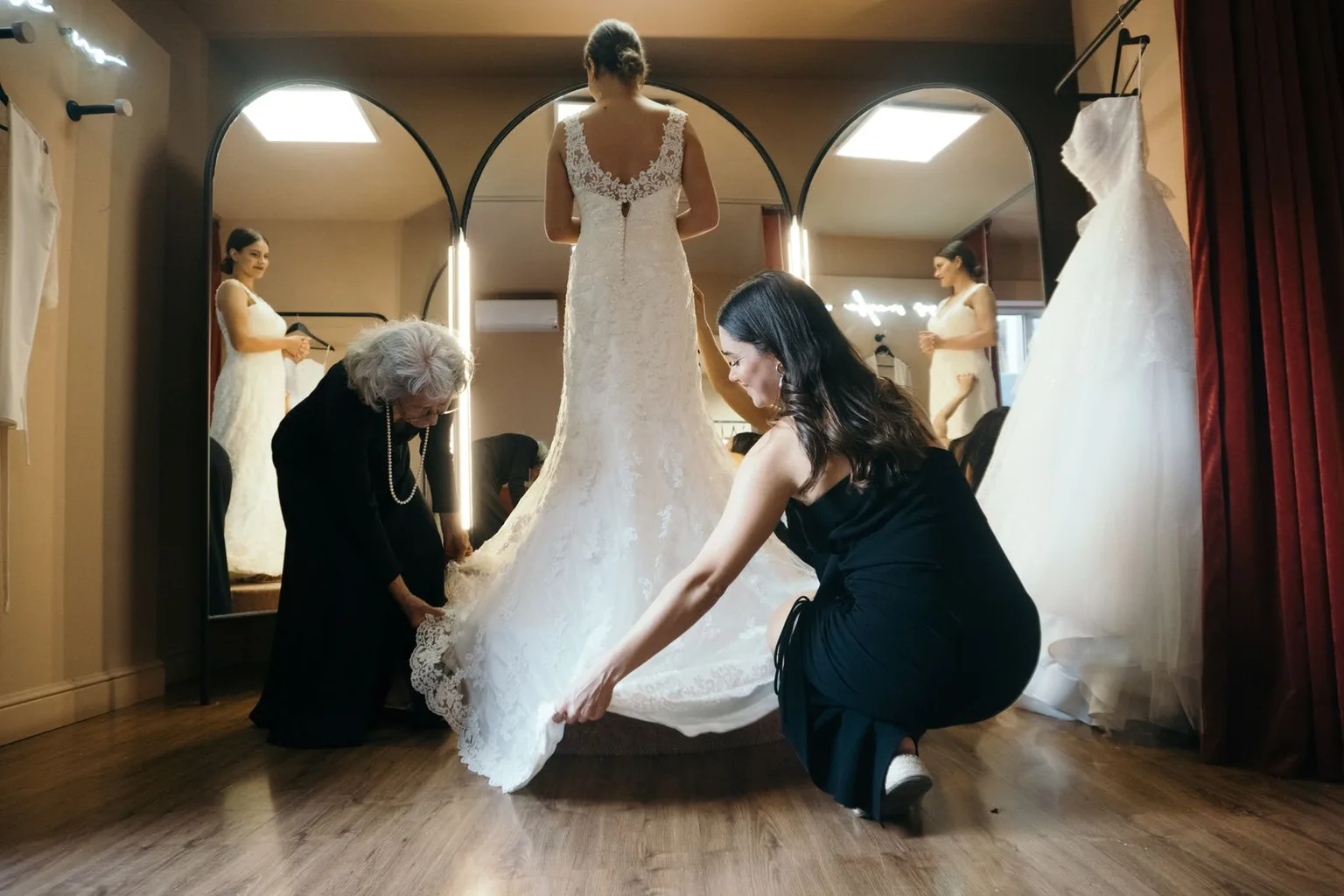
Its guide also separates simple and complex hems, bustle work, bodice work, and custom sizing. Treat that as one shop's published example, then ask your own alteration professional for a written line-item quote before you approve work.
Start with the work, not one total
A dress can need one small change or several separate jobs. A hem changes the length. A bustle lifts a train for the reception. Bodice work can change how the dress sits at the bust, waist, or sides. Those jobs use different materials and time. Put each job on its own line before you compare two totals.
| Work | AT Romance published guide | Alterations by Maheen published guide |
|---|---|---|
| Simple hem | $150 to $300 | $250 standard layer |
| Complex or multi-layer hem | $250 to $500 | $450 multi-layer, lace, or tulle |
| Bustle | $75 to $200 | $80 single point to $200 multi-point |
| Bodice or side work | $100 to $300+ | $80 minor bodice work; $100 side seams |
These are not competing national averages. They are two providers' posted menus. AT Romance says its in-house alteration service is for gowns purchased there, so its guide is not a generally available service offer.
The menus are useful because they show the questions that change the bill: how many layers are in the skirt, whether lace or tulle needs separate handling, what type of bustle the train needs, and whether the bodice needs a minor fit change or more structural work.
Make a known subtotal
Use the quote to separate known work from work that is still open. Your known subtotal is the sum of lines that the professional has confirmed for your dress. Do not add a published online price to an estimate from another shop. Those two numbers describe different services and may use different assumptions.
For example, a shop may confirm only a hem and a bustle at the first fitting. That does not mean the dress will need no other work. It means you have a subtotal for two named jobs. Write every unanswered item beside it. A complete quote can still be higher or lower after the professional sees the dress, your shoes, and the final fit.
Find the right kind of help
The Association of Sewing and Design Professionals describes a directory that includes tailors, seamstresses, alteration specialists, and dressmakers. It can be one place to look for a professional near you. The directory does not establish a price, availability, or quality level. Ask each person whether they work on gowns with your fabric, layers, train, and decoration.
Bring the dress, the exact shoes, the undergarments you plan to wear, and photographs of any requested change. That gives the professional the information needed to tell you what is possible and what will cost extra. If you are choosing between two shops, ask both to price the same written scope. A lower number may include less work.
Put alterations in the attire plan
Keep the gown purchase and alteration work on separate budget lines. The gown price answers what you paid for the dress. The alteration quote answers what this professional will do to fit or change it. The total attire cost is clearer when both lines remain visible.
Use the wedding payment schedule to place fitting deposits and balances beside your other due dates. Use the average wedding cost guide only for broad planning context. Your dress decision should use your own written quote, because a local provider's posted menu and another couple's budget cannot tell you what your gown needs.
Your next step
Your next step
Write the five changes you think your dress may need. Take that list, the dress, your shoes, and your undergarments to one fitting. Ask for a written line-item estimate, then mark each cost as confirmed or still open before you approve the work.
Frequently asked questions
Is $150 to $650 the average wedding alterations cost?
No. AT Romance lists that as its own alteration-package range. It is a local published example, not a national average or a quote for your gown.
Why can a wedding dress hem cost more than expected?
The two reviewed local price guides separate a standard or simple hem from a multi-layer, lace, tulle, beaded, or complex hem. Ask the professional to identify the hem type in your written quote.
Should I ask for a written alterations quote?
Yes. The Federal Trade Commission advises getting a written estimate and keeping records for service work. That article is about auto repair, so check local rules and the shop's policy for bridal work. A written scope can still help you compare the price with the work you approved.
Where can I look for an alterations professional?
The Association of Sewing and Design Professionals has a directory that it says includes alteration specialists, tailors, seamstresses, and dressmakers. Ask any professional about experience with your gown's materials and the exact changes you want.
Last reviewed . Editorial standards