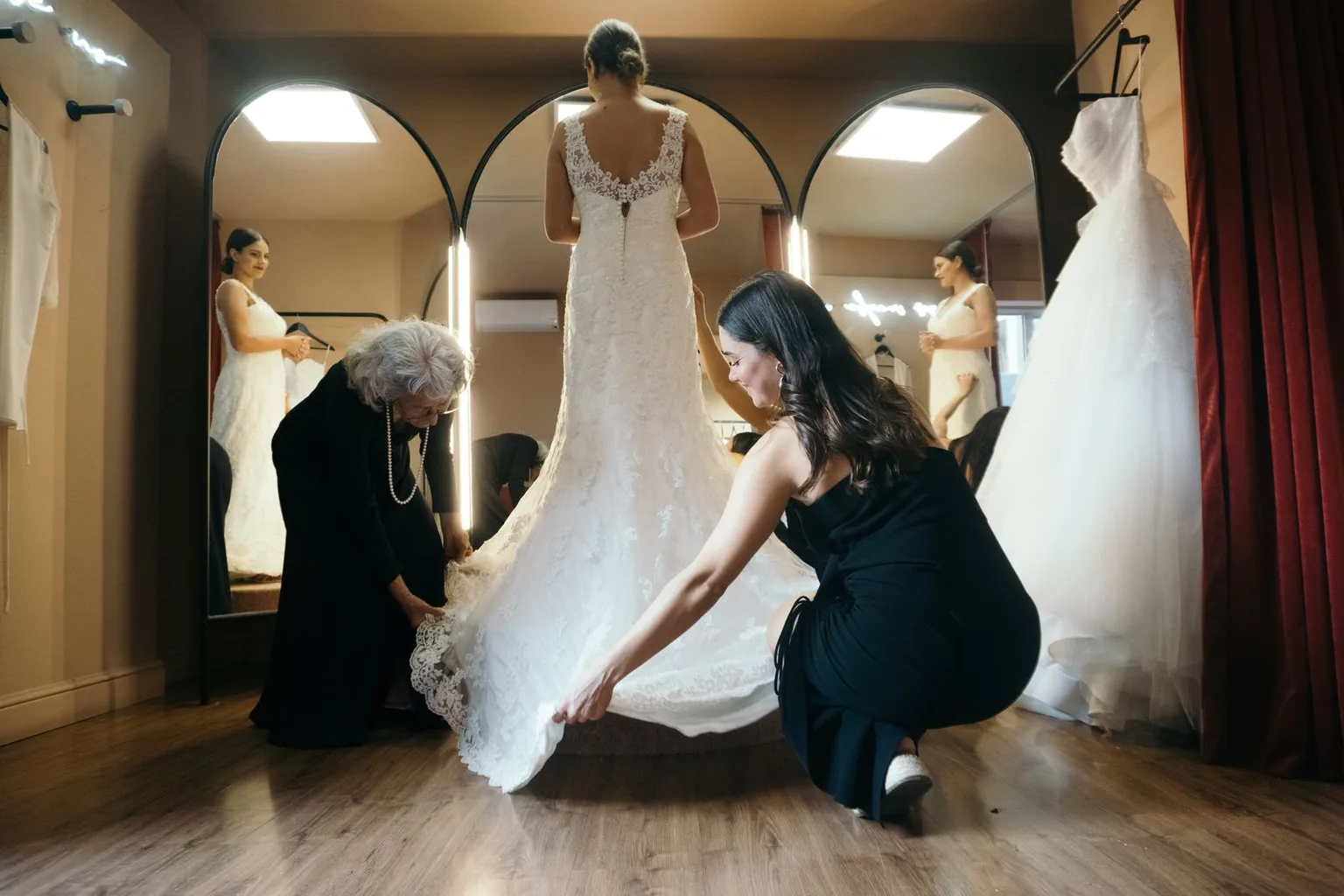
Start with the price of the gown, then ask for fitting work, tax, shipping, rush service, and approved changes as separate lines. Your written scope is more useful than a single number from another buyer.
Separate the purchase lines
One total can hide several decisions. Keep the gown price on its own line. Then list fitting work, tax, shipping, rush service, and any approved change that the seller has included or left open. Zola's cost guidance supports treating the dress purchase as a scope question rather than assuming one price applies everywhere.
The exact dress and size being ordered.
What the listed price includes today.
What is still open, including fitting work and timing.
For example, a seller may confirm the dress and shipping while the fitting work is still open. That is enough to make a partial budget line. It is not enough to call the whole attire plan complete. Write the confirmed subtotal beside the date and the person who gave it to you. Then keep the unanswered items directly underneath it.
Put the scope in writing
Keep the receipt, order record, promised delivery date, and each approved change together. The Federal Trade Commission recommends collecting documents connected to a purchase when you need to solve a problem with a business. That guidance does not create a special wedding-dress rule. It does support keeping the details you may need to compare what was promised with what was delivered.
What payment is due now and what payment is due later?
What date is the dress expected, and what happens if that date changes?
Which changes need separate approval before work starts?
If a problem remains after you ask the business to resolve it, USA.gov describes consumer-complaint options. That route does not promise a result. It is one reason to keep the order documents and your written messages in one place.
A calm script can keep the conversation focused: ‘We are ready to order this dress. Can you show us the total due today, the expected delivery date, and every charge that is not included in the listed price?’ Read the answer back. If a line remains open, write it down instead of filling it with an estimate from another shop.
Keep fitting work separate
A dress purchase and fitting work answer different questions. The dress price is the seller's price for that garment. Fitting work concerns the changes a professional can make after seeing the gown and your final shoes or undergarments. The Association of Sewing and Design Professionals describes a directory that includes alteration specialists, tailors, seamstresses, and dressmakers. It is one place to find help, not a price list or endorsement.
Ask each professional to price the same written scope. Bring the dress, the shoes, and the undergarments you expect to use. Mark each item as confirmed or still open. That gives you a calm way to discuss the number with your partner or anyone helping with the budget.
If a parent or another family member is helping, name the amount or the named cost they plan to cover. ‘We have set aside $1,500 for the gown and fitting work’ is easier to use than a broad promise to help with attire. It gives everyone one number to compare with the written scope, while leaving room for a different choice if the total changes.
Do not use a national study, a friend’s receipt, or a dress shown online to fill a missing line. Those numbers may cover a different garment, market, date, or service scope. The next useful number is the written answer for the dress and work you are considering now.
Your next step
Your next step
Write the gown price on one line. Under it, add fitting work, tax, shipping, timing, and every item that is not listed yet. Ask the seller or professional to confirm each open line before you count it in your wedding budget.
Frequently asked questions
Should I use one wedding dress total?
Use a known subtotal for confirmed lines, then keep unresolved lines visible. Zola's guidance supports treating the purchase as a set of variables rather than a universal price.
What records should I keep?
Keep the order record, receipt, delivery details, and approved changes. The FTC recommends collecting purchase documents when you need to resolve a problem with a business.
Where can I look for fitting help?
The Association of Sewing and Design Professionals has a directory that it says includes alteration specialists, tailors, seamstresses, and dressmakers. Ask each professional about the work your gown needs.